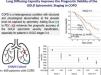
The lung diffusing capacity for carbon monoxide (DLco), a metric of gas transfer, provides physiological information distinct from spirometry. While DLco independently predicts mortality in COPD, its integration into the GOLD spirometric staging (% FEV1) to improve risk assessment, remains unexplored.
ObjectivesTo determine if DLco enhances the predictive power of GOLD spirometric classification for all-cause and respiratory mortality.
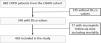
MethodsWe followed 469 patients (mean age 64 years, 58% FEV1) with complete lung function tests in the Spanish multicenter CHAIN study for up to 10 years, with mortality as the main outcome. Patients were dichotomized based on DLco impairment (<50% cutoff). A Cox proportional hazard model evaluated the added value of DLco to GOLD FEV1 spirometric staging for all-cause and respiratory mortality. Validation of the results was conducted in the Kingston COPD Canadian cohort (N=300 patients).
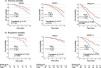
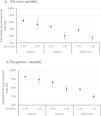
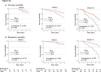
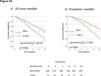
ResultsOver time, 184 (39.2%) patients died, 84 (17.9%) from respiratory causes. Adjusted analyses showed DLco<50% independently predicted all-cause [HR=1.83 (95%CI 1.32–2.54, p<0.001)] and respiratory [HR=2.27 (95%CI 1.43–3.60, p<0.001)] mortality. Incorporating DLco<50% increased mortality risk compared to FEV1 alone, particularly in GOLD stages 3 and 4, where survival time decreased by 1.23 years (p=0.002) and 1.25 years (p=0.004) for all-cause and respiratory deaths, respectively. These findings were validated in the Canadian cohort.
ConclusionsAdding DLco to FEV1 enhances the prognostic accuracy of the GOLD spirometric severity classification, especially for patients in GOLD stages 3–4 at higher risk of adverse outcomes.
ClinicalTrials.gov Identifier: NCT01122758.