

Respiratory syncytial virus (RSV) is increasingly recognized as a major pathogen causing lower respiratory tract infections in older adults, contributing to significant rates of hospitalization, healthcare utilization, and short- and long-term complications and mortality [1]. Its impact is particularly severe in patients with chronic comorbidities, immunocompromised individuals, and nursing home residents. Beyond respiratory infection, RSV has also been associated with complications such as bacterial co-infection, sepsis, and cardiovascular events [1]. Recent real-world evidence demonstrates the substantial economic burden in adults aged ≥60 years across Europe, showing higher rates of healthcare visits, hospitalizations, and considerable costs driven specifically by inpatient care, reaching up to €6900 per patient [2]. The recent introduction of RSV vaccines marks an important milestone in adult immunization. Clinical trials have shown strong efficacy, and emerging real-world evidence confirms important reductions in severe disease, although population-level impact depends on uptake, vaccine effectiveness (VE), and safety.
A recent systematic review and meta-analysis of 36 studies (2023–2025), including more than 121 million individuals, reported low uptake (18% among adults ≥60 years in the U.S.) but high VE, with VE estimates of 75% against infection, 76% against emergency department visits, 75% against hospitalization, and nearly 80% against severe disease [3]. Adverse events were predominantly mild, and Guillain-Barré syndrome was observed only rarely, at very low rates per million doses [3]. These findings are corroborated by a second meta-analysis of 1.5 million participants, which demonstrated a 77% reduction in RSV-related hospitalizations (OR, 0.23) and similar reductions in emergency visits (OR, 0.23), with slightly lower protection in immunocompromised individuals [4]. Although these findings consistently support substantial vaccine effectiveness, they derive from heterogeneous studies that differ in design, vaccine products, circulating seasons, case definitions, healthcare settings, and patient risk profiles. Therefore, direct comparisons across studies should be interpreted with caution.
A population-impact modelling study in US adults aged ≥60 years during the first season of vaccine availability (2023–2024) projected the potential public health impact of vaccination, estimating that vaccination could prevent >18,000 emergency visits, 23,000 hospitalizations, and 2000 deaths annually, rising to >65,000 visits and nearly 7000 deaths prevented with higher coverage [5].
A population-based study from England evaluated the early impact of the RSV vaccination programme in adults aged 75–79 years using a regression discontinuity design and national surveillance data. During the 2024–2025 season, vaccine coverage increased from 35% to 47% and vaccination eligibility was associated with a 30% reduction in RSV-related hospitalizations (95% CI, 18–40) compared with expected rates without vaccination [6]. This population-level effect corresponds to an estimated VE of approximately 72%, as found in individual-level studies. A similar study in Scotland assessed the local vaccination programme following its introduction in adults aged 75–79 years in August 2024 [7]. Using a regression discontinuity design and national hospitalization data, RSV-related admission rates were compared across eligible and ineligible age groups before and after rollout. Vaccine coverage exceeded 50% early and reached nearly 70% within months. The introduction of vaccination was associated with a 62% reduction (95% CI, 35.0–79.8) in RSV-related hospitalizations, indicating a strong population-level impact during a period of high RSV circulation. Although these quasi-experimental studies provide important early evidence of population-level impact of RSV vaccination programmes, their findings should be interpreted within the context of their study design and the early phase of programme implementation. Nevertheless, the observed reductions are consistent with vaccine effectiveness estimates reported in individual-level studies.
A randomized clinical trial (DAN-RSV) evaluated the VE of the RSVpreF vaccine in adults ≥60 years from Denmark, including individuals with and without cardiovascular disease (CVD) [8]. After a median follow-up of about 22 weeks, vaccination significantly reduced RSV-related outcomes, including an 84% reduction in cardiorespiratory hospitalizations and an 83% reduction in respiratory hospitalizations. In contrast, the effects on broader cardiovascular outcomes were modest (10% reduction) and not statistically significant. Importantly, VE against RSV-related outcomes was consistent regardless of CVD status, indicating consistent protection across risk groups. These findings support protection against RSV-related respiratory outcomes, whereas evidence for prevention of broader cardiovascular events remains limited and requires further investigation.
Another prespecified secondary analysis of the DAN-RSV trial examined VE among individuals with and without atherosclerotic cardiovascular disease (ASCVD) [9]. VE against RSV-related respiratory hospitalization was high and comparable between groups (80% in those without ASCVD and 100% in those with ASCVD). However, VE against major adverse cardiovascular events was modest (9–12%) and not statistically significant. Thus, RSV vaccination provided consistent protection against RSV-related disease regardless of ASCVD status. However, current evidence does not support a significant reduction in broader cardiovascular outcomes, and further studies are needed to better define the cardiovascular benefits of RSV vaccination. Current post-marketing safety data are generally reassuring, although continued pharmacovigilance remains essential as vaccination programmes expand and additional evidence accumulates regarding rare adverse events. A US VAERS analysis of 6569 vaccinated adults identified predominantly mild adverse events, with hospitalization rates between 5% and 7% and rare serious events [10]. Co-administration with influenza or COVID-19 vaccines was generally well tolerated, with mostly mild adverse events. Although current evidence supports the safety of co-administration, additional real-world data are needed to better understand its potential impact on immunogenicity and vaccine effectiveness [11].
VE against severe outcomes remains consistently high but shows some waning over time. The magnitude of this decline appears to vary according to the clinical outcome evaluated, patient characteristics, circulating RSV seasons, and potentially the vaccine product. Reduced durability among the oldest adults and immunocompromised individuals may also reflect immunosenescence and underlying immune dysfunction. A large cohort study demonstrated declines in protection against infection (83% to 59%) and hospitalization (89% to 57%) over 18 months, particularly in immunocompromised individuals and those ≥80 years [12].
Protection appears to persist across seasons, with VE ranging from 60 to 80%, although estimates vary according to study population, vaccine product, and outcome definition, and protection appears somewhat lower in high-risk populations such as immunocompromised individuals and those with greater comorbidity burden [13–15].
While earlier discussions have emphasized the need for RSV vaccination in older adults, the accumulating real-world evidence shifts the focus from why vaccinate to how to maximize population-level impact. While vaccine efficacy and early real-world effectiveness are now reasonably well established, the next major challenge is translating these benefits into sustained population-level reductions in disease burden through optimized implementation strategies (Fig. 1).
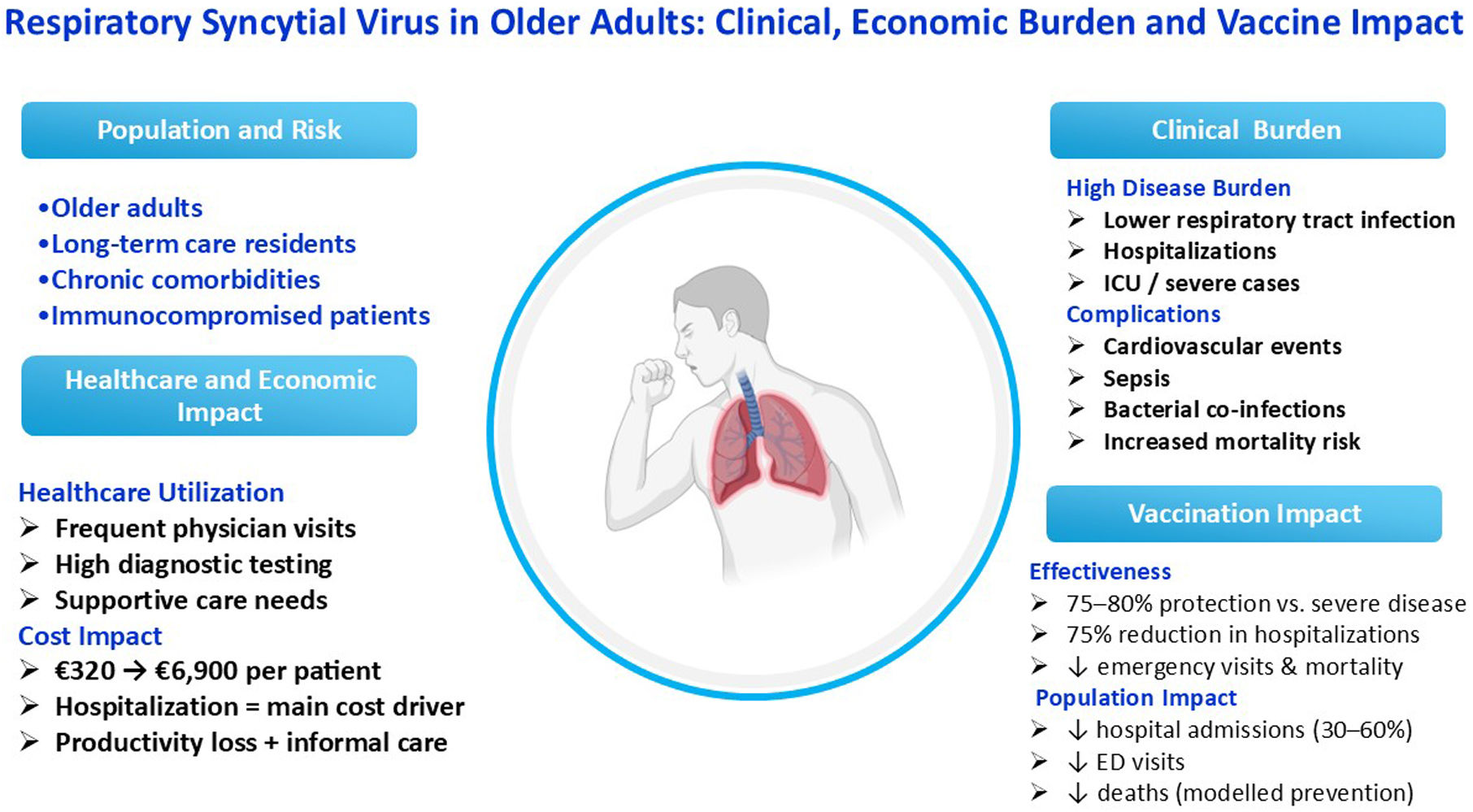
Summary of the burden of respiratory syncytial virus (RSV) infection in older adults and the potential impact of vaccination. The figure summarizes populations at increased risk of severe disease, the associated clinical and economic burden, and key findings from recent clinical trials and real-world evidence regarding vaccine effectiveness and early population-level impact. Vaccine effectiveness estimates and reductions in healthcare utilization are approximate ranges derived from multiple studies using different methodologies and should be interpreted within the context of the respective study designs. Abbreviations: ICU, intensive care unit; ED, emergency department.
First, vaccine uptake remains the principal limitation. Despite strong VE, coverage in older adults remains suboptimal, thereby constraining the potential public health benefit. RSV vaccination has not yet been fully integrated into routine adult immunization programmes, and improving uptake will require alignment with existing adult immunization programmes, integration with seasonal influenza and COVID-19 vaccination campaigns where appropriate, and targeted communication strategies for high-risk populations. Vaccine uptake is also influenced by risk perception, healthcare access, and programme implementation. Second, heterogeneity in VE across populations suggests that uniform vaccination strategies may be insufficient. Reduced and more rapidly waning protection in immunocompromised individuals and those with a high comorbidity burden supports the need for more tailored approaches, including prioritization of immunocompromised individuals, adults aged ≥80 years, nursing home residents, and patients with cardiopulmonary comorbidities, and potentially adapted vaccination schedules as additional evidence becomes available. Third, waning immunity introduces uncertainty regarding the duration of protection and the optimal revaccination strategies. Although protection extends across seasons, the observed decline in vulnerable populations underscores the need for continued real-world surveillance to inform booster policy development.
Finally, current post-marketing safety data are generally reassuring; however, continued pharmacovigilance remains essential as evidence accumulates and rare adverse events continue to be evaluated.
Although most real-world evidence has been generated in North America and Europe, RSV remains an important cause of morbidity among older adults worldwide. Expanding vaccination programmes in low- and middle-income countries will require implementation strategies adapted to local healthcare infrastructure, resource availability, and vaccine access. As additional real-world evidence emerges from diverse geographic settings, it will further inform equitable vaccination policies globally.
In summary, current real-world evidence consistently suggests that RSV vaccines provide substantial protection against severe RSV outcomes in older adults, although the magnitude and durability of protection may vary across populations, study designs, and vaccine products. However, maximizing their public health impact will depend less on vaccine performance itself and more on the effectiveness of implementation strategies, programme design, and sustained uptake.
RSV vaccination should therefore be regarded as an important component of healthy ageing strategies. To maximize its impact will require improving vaccine uptake, prioritizing those at greatest risk including immunocompromised individuals, adults aged ≥80 years, nursing-home residents, and patients with cardiopulmonary comorbidities, and maintaining ongoing surveillance to guide future vaccination strategies.
Artificial intelligence involvementNo artificial intelligence tools were used in process of this study. All work was carried out by the authors.
FundingNo funding to declare.
Conflicts of interestThe authors declare no conflicts of interest.