To estimate the incidence of tuberculosis (TB) among tuberculin skin test/interferon-γ release assay-positive contacts of patients with pulmonary TB in Catalonia and identify predictors of progression to TB disease.
MethodsWe conducted a cohort study of 1616 tuberculin skin test/interferon-γ release assay-positive contacts of patients with pulmonary TB diagnosed between 2019 and 2021 in Catalonia, Spain. Participants were followed through 2023. Incident TB was defined as disease diagnosed at least 30 days after initiation of treatment in the index case. All cases diagnosed among household contacts younger than 5 years were also considered incident cases. Cox proportional hazards models were used to identify risk factors for incident TB.
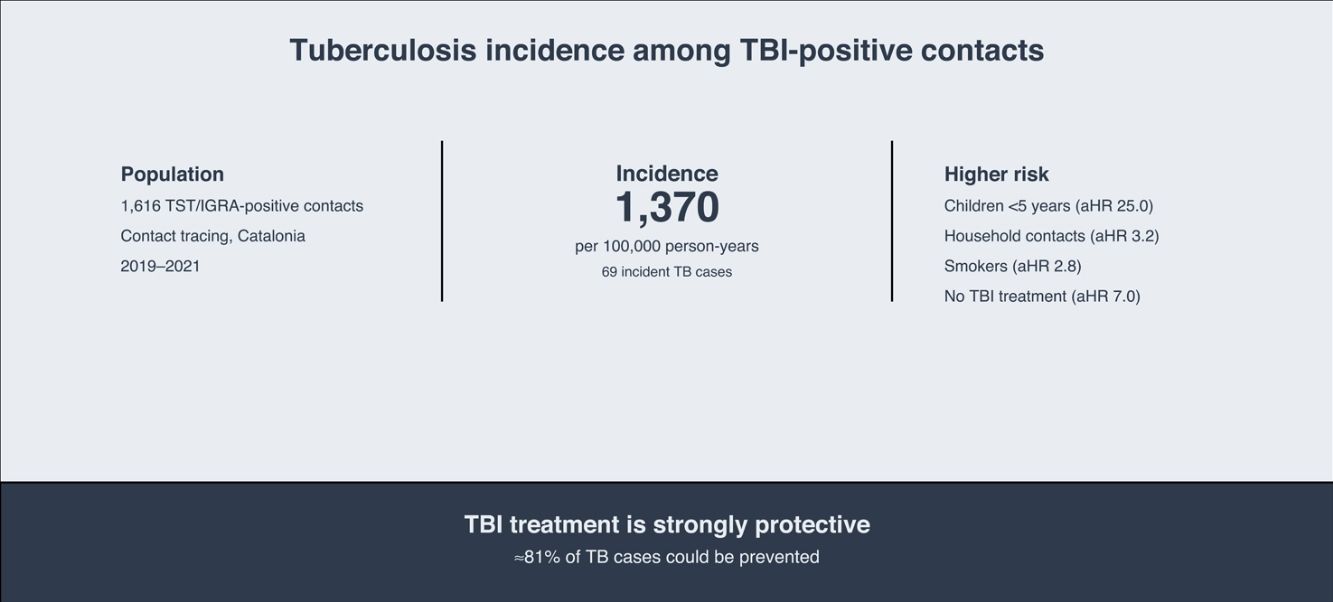
ResultsDuring a median follow-up of 3.6 years, 69 contacts (4.3%) developed TB, corresponding to an incidence rate of 1370 cases per 100000 person-years. Children younger than 5 years had the highest risk (adjusted HR [aHR], 25.0; 95%CI, 11–59). An increased risk was also observed among household contacts (aHR, 3.2; 95%CI, 1.6–6.5), smokers (aHR, 2.8; 95%CI, 1.7–4.6), and contacts who did not initiate treatment for TB infection (TBI) (aHR, 7.0; 95%CI, 3.3–14.6). The etiologic fraction of risk was 81.4%. Completion of TBI treatment was strongly protective.
ConclusionsPrioritizing TBI treatment and adherence among high-risk contacts, especially young children and household contacts, is essential to prevent progression to TB disease.

Tuberculosis (TB) remains a leading cause of morbidity and mortality worldwide, particularly in low- and middle-income countries, and continues to pose challenges in high-income settings with a low incidence of TB [1,2]. Early detection and treatment of tuberculosis infection (TBI) among contacts of patients with pulmonary TB are central components of TB elimination strategies because they help interrupt transmission and identify individuals most likely to benefit from preventive treatment [3,4]. Recently infected contacts have an increased risk of progression to TB disease, particularly during the first 2 years after infection [5]. Targeted identification and treatment of TBI among contacts have a greater effect on reducing TB incidence than population-wide screening. Spain currently has a TB incidence of approximately 8–10 cases per 100000 population and is therefore classified as a low-incidence setting [1].
Contact tracing is a key public health intervention for identifying, evaluating, and managing individuals exposed to TB [6]. It facilitates early case detection, particularly among household contacts with intense exposure. Individuals who develop TBI after exposure to pulmonary TB have an estimated lifetime risk of progression to TB disease of approximately 10%, with around half of that risk occurring during the first 2–5 years after infection [7]. The risk is highest during the early months after infection, particularly among untreated contacts and vulnerable groups such as children, recent migrants, hard-to-reach populations, and immunocompromised individuals [3,8,9].
In low-incidence settings, in which a substantial proportion of TB cases occur among foreign-born individuals from high-incidence countries, contact tracing can also promote health equity by reaching socially vulnerable populations. Optimizing contact tracing and TBI treatment is essential to reduce TB transmission, prevent future cases, and advance toward the TB elimination targets established in the World Health Organization End TB Strategy [1].
Low-burden TB settings generally have structured TB control programs that include systematic contact investigation. Their outcomes depend on factors such as age, immune status, exposure intensity, and the clinical and microbiological characteristics of the index case [8]. However, data on the long-term incidence of TB among contacts with TBI identified through contact tracing remain limited. Estimating TB incidence in this population is essential to evaluate preventive strategies and optimize resource allocation. Therefore, this study aimed to estimate the incidence rate of TB and identify risk factors for progression to TB disease among individuals with TBI detected during contact investigations of patients with pulmonary TB in Catalonia, Spain.
MethodsStudy designWe conducted a population-based retrospective cohort study of contacts with TBI identified among patients with pulmonary TB who initiated treatment during a 3-year period. Contacts were identified by all epidemiological surveillance units in Catalonia, Spain. The analysis was based on routinely collected data from the Catalan Tuberculosis Control Program, which is approved by the Spanish Ministry of Health.
Study populationWe included all contacts with TBI identified through contact tracing between January 1, 2019, and December 31, 2021. Participants were followed through September 30, 2023.
TBI was defined as a positive baseline test for TB infection, consisting of either a tuberculin skin test (TST) induration of at least 5mm or a positive interferon-γ release assay (IGRA), without evidence of TB disease [10]. Only contacts of index cases with pulmonary TB were included; contacts of patients with exclusively extrapulmonary TB were excluded.
Coprevalent TB cases were excluded. A coprevalent case was defined as TB diagnosed in a contact aged 5 years or older concurrently with the index case or within 30 days after initiation of treatment in the index case [11]. Incident cases were defined as cases in which TB treatment was initiated at least 30 days after treatment began in the index case [11,12]. All children younger than 5 years living with an adult index case were also classified as incident cases [13]. This definition reflects the possibility that children younger than 5 years may progress rapidly from infection to TB disease.
We excluded contacts with a past medical history of TB, an incomplete clinical evaluation, missing follow-up information, or residence outside Catalonia at the time of contact tracing. Demographic and clinical data were obtained from the regional TB surveillance registry, which records index cases, contact investigations, diagnostic results, and treatment outcomes. Progression to TB disease was confirmed microbiologically or clinically. Contacts who were lost to follow-up or migrated were censored on the last date for which information was available. Deaths were censored on the date of death according to the regional population registry.
VariablesSociodemographic and epidemiological variables, including sex, age, country of origin, date of birth, contact investigation outcome, and TBI treatment status, were recorded by the epidemiological surveillance units.
Treatment completion was defined as adherence through completion of the prescribed regimen, as assessed by the treating physician. Nonadherence included refusal to initiate treatment, voluntary discontinuation, and treatment discontinuation because of toxicity or unspecified reasons.
Missing sociodemographic data and final follow-up dates for contacts who migrated or died were retrieved from the regional population registry. Additional clinical variables were obtained through retrospective review of hospital and primary care medical records. These variables included smoking by the index case and contacts, defined as any tobacco use during the preceding 6 months; alcohol misuse, defined as consumption of more than 280g of alcohol per week for men or more than 140g per week for women; diabetes mellitus; and HIV infection. All variables had been previously defined in an operations and procedures manual.
Smoking status was obtained from medical records when available. Missing smoking data were treated as missing and excluded from multivariable analyses using a complete-case approach. No imputation was performed. Missing data were reflected in the applicable denominators and were not imputed in the multivariable analyses. Standard TBI treatment regimens included 3 months of rifampicin plus isoniazid and 6 months of isoniazid. Adherence was defined as completion of the full prescribed regimen.
Field proceduresThe Catalan Tuberculosis Control Program evaluates all newly diagnosed TB cases. Contact tracing is conducted in accordance with national guidelines and considers the infectiousness of the index case, intensity and duration of exposure, exposure setting, and individual risk of progression to TB disease [14]. Although contact tracing is prioritized for patients with smear-positive pulmonary TB, contacts of all patients with pulmonary TB were included in this study.
Contacts were classified according to exposure as close contacts (≥6h/d), frequent contacts (≥1h/d), nondaily contacts (≥6h/wk), or sporadic contacts [8,11,15]. For patients with pulmonary TB, contact investigations included individuals exposed during the 3 months before symptom onset [16,17]. Exposure intensity and the risk of TB disease were used to classify contacts as high, medium, or low priority [16,17].
High-priority contact investigations were initiated promptly after diagnosis of the index case. Data collection included basic sociodemographic information, including name, country of origin, sex, and date of birth; clinical history; and testing for TBI by TST or IGRA using QuantiFERON, according to the risk of infection and the presence of immunosuppression.
TBI treatment was considered for contacts with a TST induration of at least 5mm or a QuantiFERON result of at least 0.35IU/mL [18–20]. Contacts with an initially negative test were retested approximately 2 months after their last exposure, in accordance with national guidelines. Quantitative TB1 and TB2 values were not collected.
All infected contacts underwent clinical assessment and chest radiography to exclude TB disease. Contacts diagnosed with TB disease during this initial assessment were classified as coprevalent cases and excluded. After TB disease was excluded, clinicians recommended either TBI treatment or clinical follow-up.
Statistical analysisBaseline characteristics were summarized as No. (%) for categorical variables and median (IQR) for continuous variables. The cumulative incidence of TB during 4 years of follow-up was estimated using Kaplan–Meier curves, both overall and stratified by sex, age, country of birth, household exposure, smoking by contacts and index cases, and TBI treatment status. Treatment status was classified as treatment completed, treatment not completed, treatment not initiated, or unknown.
Log-rank and Wilcoxon tests were used for hypothesis testing. Statistical significance was set at P<.05.
Incidence rates and 95%CIs were calculated per 100000 person-years, both overall and according to TBI treatment prescription and completion status. Risk factors were identified using univariable and multivariable Cox proportional hazards regression models to estimate crude HRs (cHRs) and adjusted HRs (aHRs), with their corresponding 95%CIs.
Cox regression was performed under 2 scenarios. The primary analysis excluded incident cases defined exclusively on the basis of age younger than 5 years and household exposure, whereas the secondary analysis included these cases. Complete-case models were initially fitted, followed by backward selection using a removal threshold of P>.20, while retaining age and sex in all models. For the TBI treatment prescription variable, missing values were included in the nonadherent category.
The proportional hazards assumption was evaluated using Schoenfeld residuals [21]. Diagnostic delay was calculated as the median number of days and IQR among index cases with infected contacts, including index cases with incident cases and those with incident cases among children younger than 5 years. The etiologic fraction of risk was calculated as (RR−1)/RR, where RR denotes relative risk.
Statistical analyses were conducted using R and RStudio version 4.3.1, “Beagle Scouts.” Diagnostic delay was estimated among 490 index cases with infected contacts, including 46 index cases with incident TB among their contacts and 28 with incident TB among contacts younger than 5 years.
Ethical considerationsThe study complied with Spanish and European data protection regulations, including Organic Law 15/1999 and Regulation (EU) 2018/1725, and followed the ethical principles of the Declaration of Helsinki of 1964, as revised in Edinburgh in 2000. All data were handled in strict confidence in accordance with applicable regulations [22–24].
The study protocol was approved by the Ethics Committee of Hospital Universitari Arnau de Vilanova, Lleida, Spain (code CEIC-2049). All participants received detailed information about the aims of the study before inclusion.
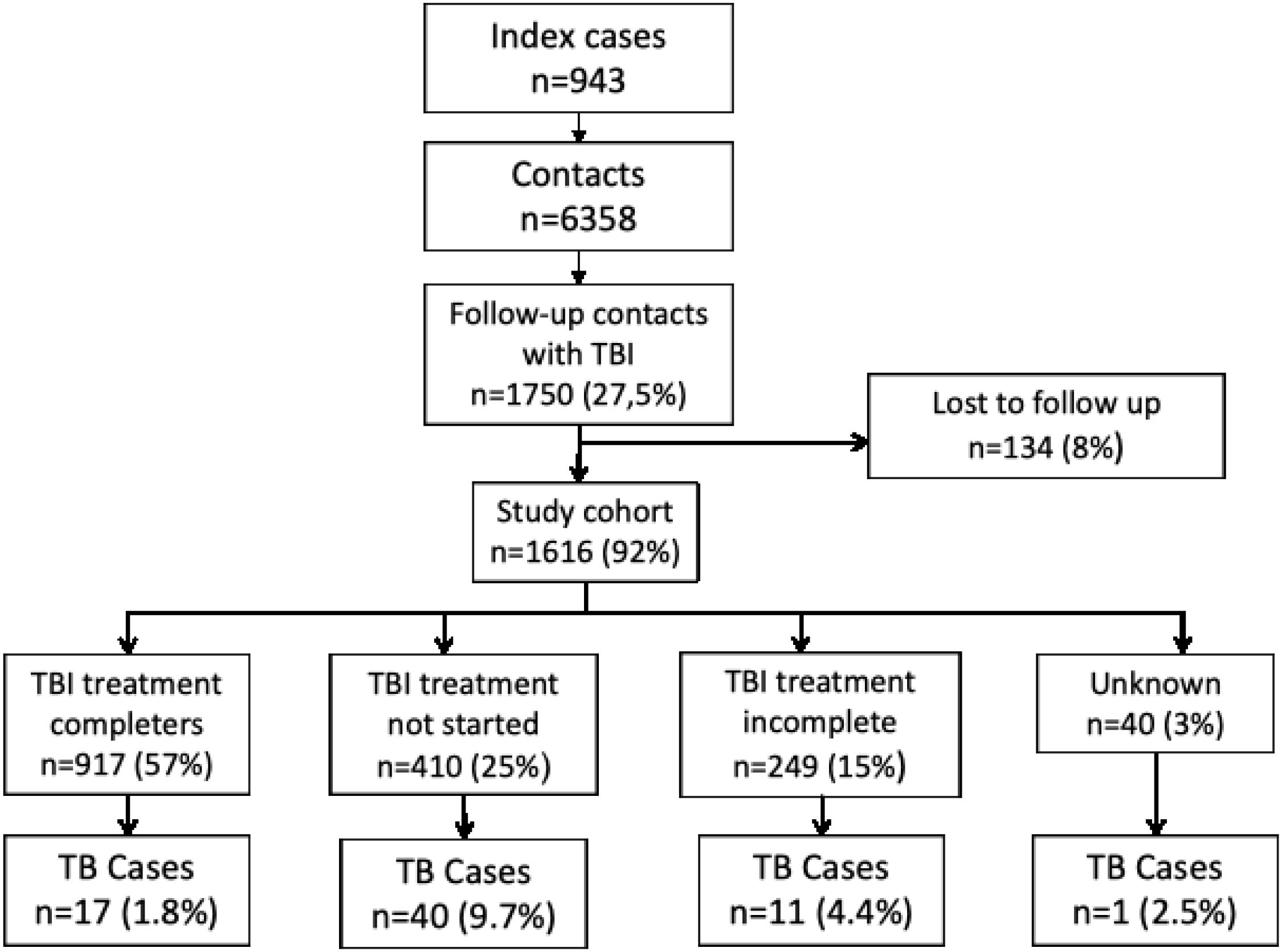
ResultsA total of 943 patients with pulmonary TB and 6358 close contacts were identified and evaluated, corresponding to a mean of 6.7 contacts per index case. Of these contacts, 1750 (27.5%) tested positive for TBI, and 134 were lost to follow-up. The final cohort included 1616 individuals, representing 92.3% of contacts with positive TBI test results. Among them, 69 developed TB and were classified as incident cases (Fig. 1).

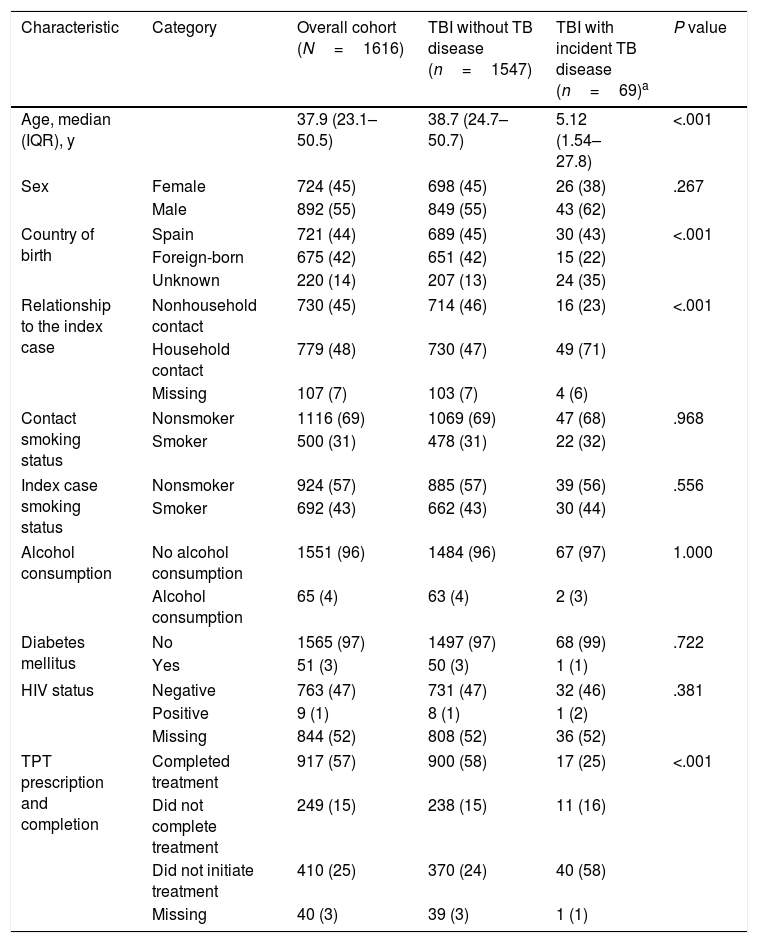
Table 1 summarizes the baseline characteristics of the overall cohort (N=1616), contacts with TBI who did not develop TB (n=1547), and contacts who developed TB (n=69). Median age was similar across the groups, although contacts who developed TB were younger, with a median age of 5.12 years (IQR, 1.54–27.8 years); P<.001. Sex distribution did not differ significantly between the groups; P=.267, and males accounted for 55% of the cohort.
Descriptive characteristics of the overall study population and according to incident tuberculosis status.
| Characteristic | Category | Overall cohort (N=1616) | TBI without TB disease (n=1547) | TBI with incident TB disease (n=69)a | P value |
|---|---|---|---|---|---|
| Age, median (IQR), y | 37.9 (23.1–50.5) | 38.7 (24.7–50.7) | 5.12 (1.54–27.8) | <.001 | |
| Sex | Female | 724 (45) | 698 (45) | 26 (38) | .267 |
| Male | 892 (55) | 849 (55) | 43 (62) | ||
| Country of birth | Spain | 721 (44) | 689 (45) | 30 (43) | <.001 |
| Foreign-born | 675 (42) | 651 (42) | 15 (22) | ||
| Unknown | 220 (14) | 207 (13) | 24 (35) | ||
| Relationship to the index case | Nonhousehold contact | 730 (45) | 714 (46) | 16 (23) | <.001 |
| Household contact | 779 (48) | 730 (47) | 49 (71) | ||
| Missing | 107 (7) | 103 (7) | 4 (6) | ||
| Contact smoking status | Nonsmoker | 1116 (69) | 1069 (69) | 47 (68) | .968 |
| Smoker | 500 (31) | 478 (31) | 22 (32) | ||
| Index case smoking status | Nonsmoker | 924 (57) | 885 (57) | 39 (56) | .556 |
| Smoker | 692 (43) | 662 (43) | 30 (44) | ||
| Alcohol consumption | No alcohol consumption | 1551 (96) | 1484 (96) | 67 (97) | 1.000 |
| Alcohol consumption | 65 (4) | 63 (4) | 2 (3) | ||
| Diabetes mellitus | No | 1565 (97) | 1497 (97) | 68 (99) | .722 |
| Yes | 51 (3) | 50 (3) | 1 (1) | ||
| HIV status | Negative | 763 (47) | 731 (47) | 32 (46) | .381 |
| Positive | 9 (1) | 8 (1) | 1 (2) | ||
| Missing | 844 (52) | 808 (52) | 36 (52) | ||
| TPT prescription and completion | Completed treatment | 917 (57) | 900 (58) | 17 (25) | <.001 |
| Did not complete treatment | 249 (15) | 238 (15) | 11 (16) | ||
| Did not initiate treatment | 410 (25) | 370 (24) | 40 (58) | ||
| Missing | 40 (3) | 39 (3) | 1 (1) | ||
Data are expressed as No. (%) unless otherwise indicated.
Incident cases included children younger than 5 years who lived in the same household as the index case and developed TB disease within 30 days after initiation of treatment in the index case.
TBI, tuberculosis infection; TB, tuberculosis; TPT, tuberculosis preventive treatment; DM, diabetes mellitus; HIV, human immunodeficiency virus; IQR, interquartile range; HR, hazard ratio; cHR, crude hazard ratio; aHR, adjusted hazard ratio; CI, confidence interval; PTB, pulmonary tuberculosis; TST, tuberculin skin test; IGRA, interferon-γ release assay.
Spain was the country of birth for 44% of participants, whereas 42% were foreign-born. Unknown country of birth was more frequent among contacts who developed TB than among those who did not (35% vs 13%; P<.001). Household exposure was also more frequent among contacts who developed TB than among those who did not (71% vs 47%; P<.001) (Table 1). No significant differences were observed in tobacco use, alcohol consumption, diabetes mellitus, or HIV status. HIV status was missing for 52% of the cohort. The unknown category for country of birth reflects missing information in the surveillance registry.
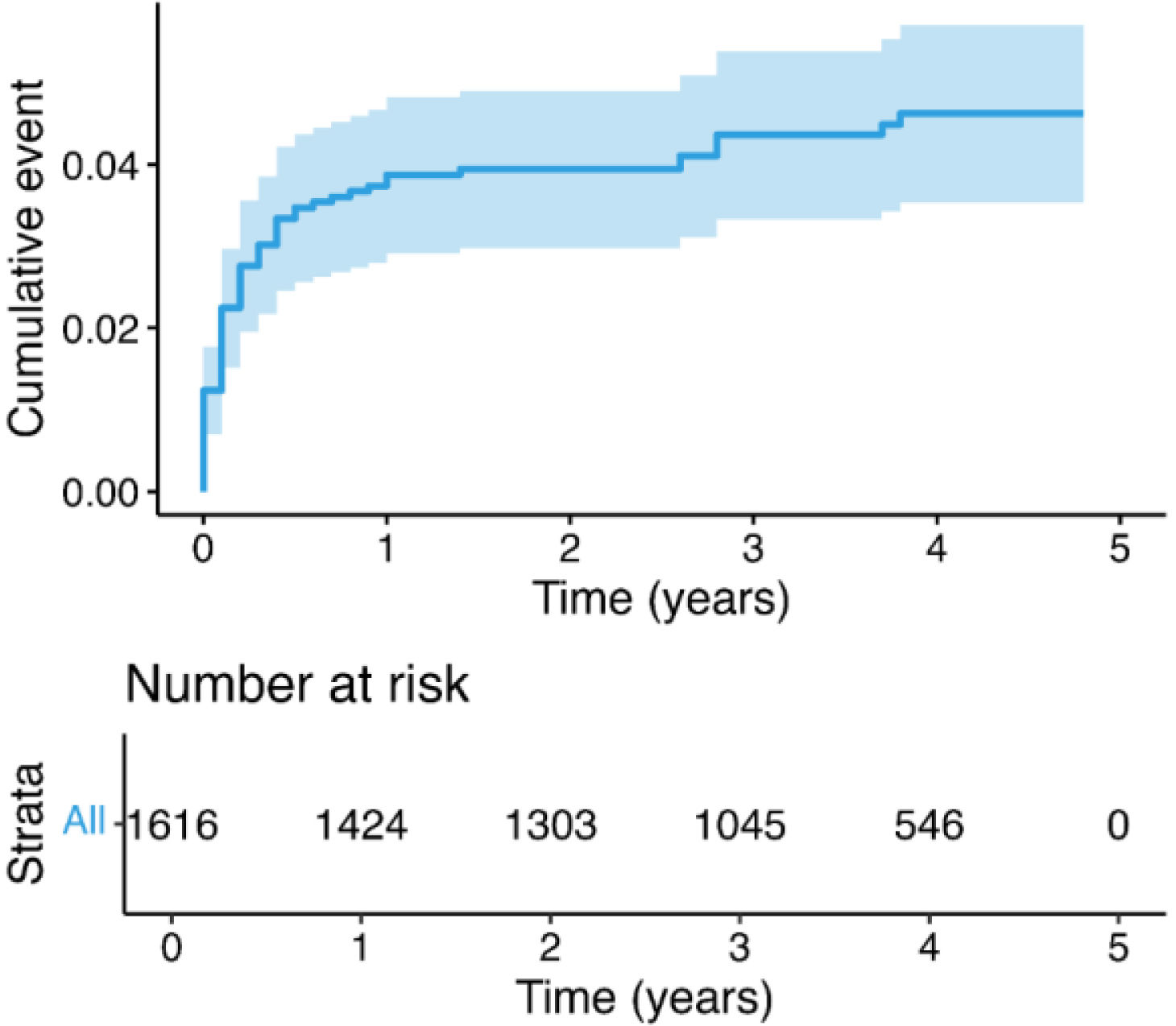
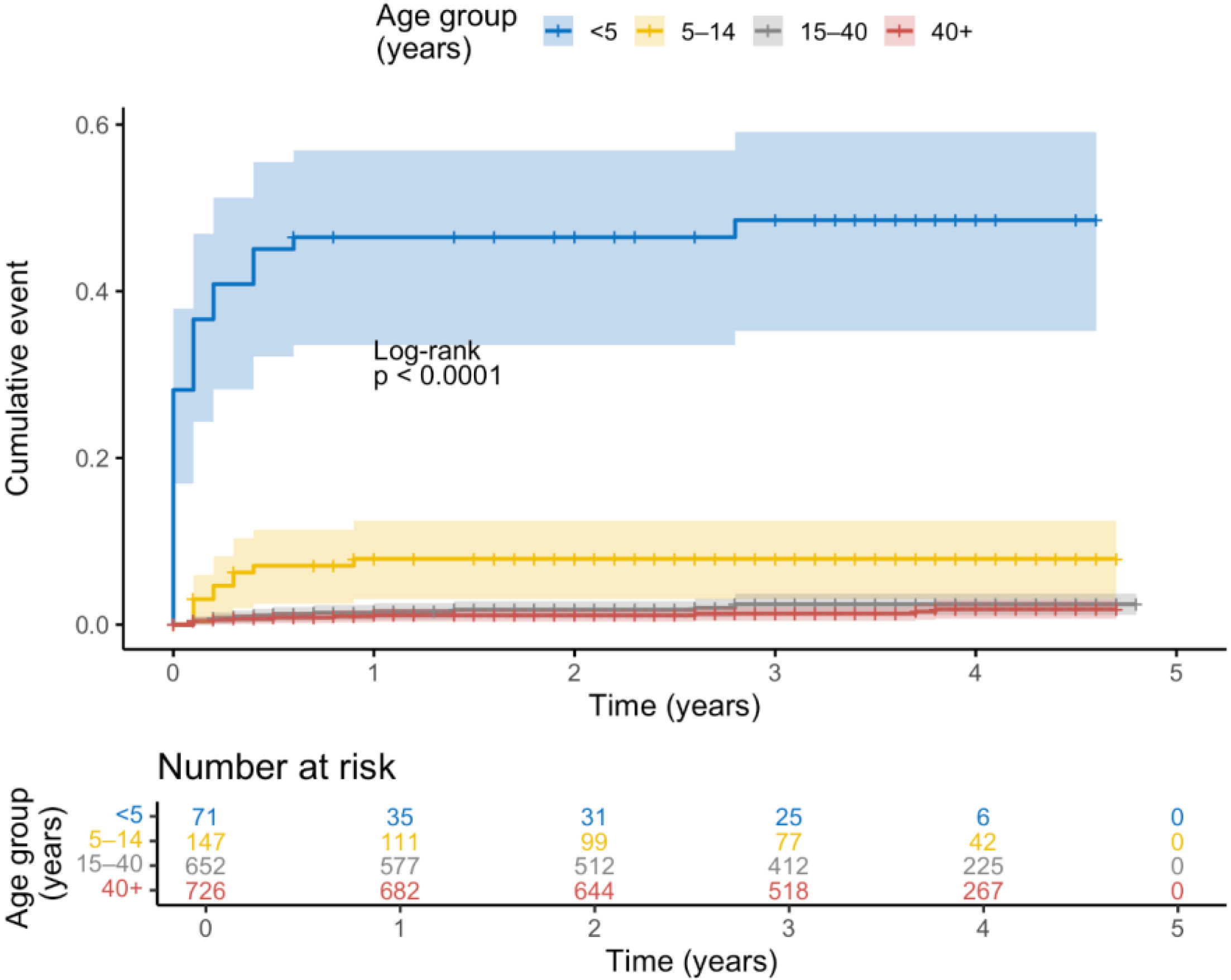
Among the 69 incident cases, the TB incidence rate was 1370 cases per 100000 person-years (95%CI, 1066–1734). Median follow-up was 3.6 years (IQR, 2.6–4.2 years). The cumulative risk of TB was 3.9% at 2 years and 4.6% at 4 years (Fig. 2). The risk was highest among children younger than 5 years, reaching 46% at 2 years and 49% at 4 years (Fig. 3).


The median diagnostic delay among index cases with infected contacts (n=490) was 63 days (IQR, 24–124 days). The median delay was 81 days among index cases whose contacts subsequently developed incident TB (n=46) and 74 days among index cases with incident TB in contacts younger than 5 years (n=28).
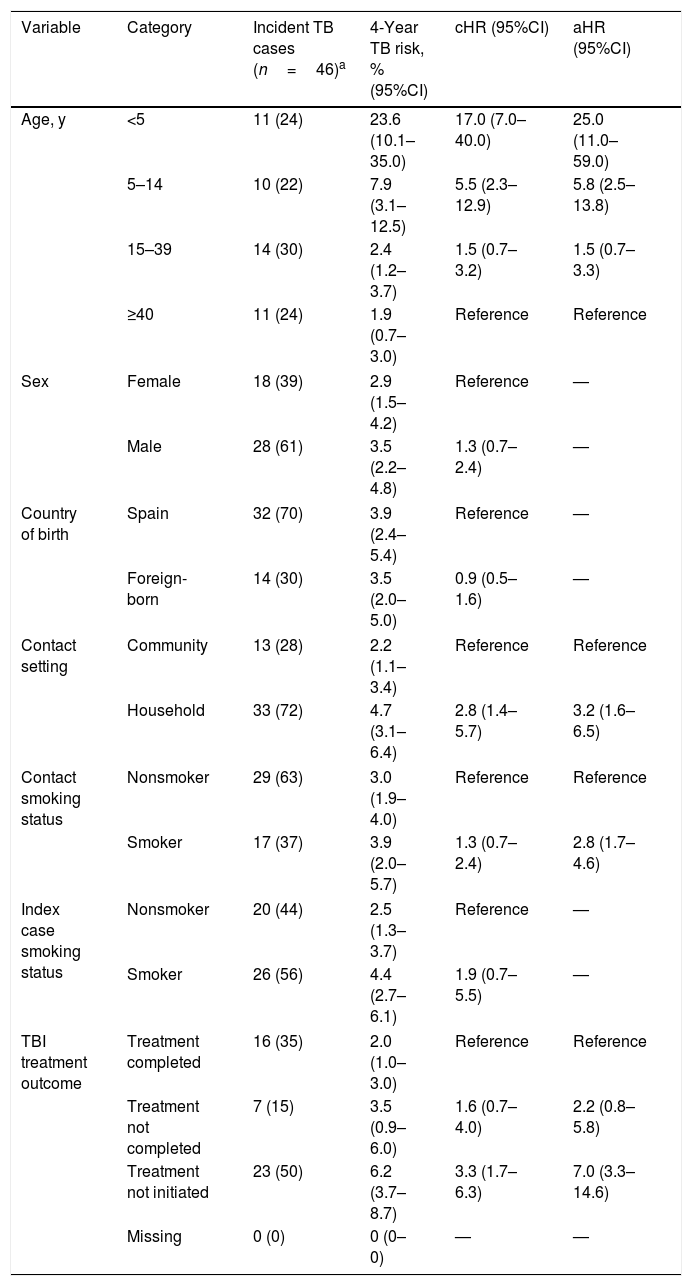
In the multivariable Cox models, which included 46 incident cases, age was strongly associated with progression to TB disease. Compared with contacts aged 40 years or older, children younger than 5 years had an aHR of 25.0 (95%CI, 11–59; P<.001), whereas children aged 5–14 years had an aHR of 5.8 (95%CI, 2.5–13.8; P<.001). No significant association was observed among contacts aged 15–39 years (aHR, 1.5; P=.34).
Household exposure was associated with an increased risk of TB (aHR, 3.2; P=.002). Smoking by the contact was also associated with an increased risk (aHR, 2.8; P<.001). Sex and country of birth were not significantly associated with progression to TB disease (Table 2).
Proportional hazards Cox model with hazard ratios (HR) crudes (cHR) and adjusted (aHR).
| Variable | Category | Incident TB cases (n=46)a | 4-Year TB risk, % (95%CI) | cHR (95%CI) | aHR (95%CI) |
|---|---|---|---|---|---|
| Age, y | <5 | 11 (24) | 23.6 (10.1–35.0) | 17.0 (7.0–40.0) | 25.0 (11.0–59.0) |
| 5–14 | 10 (22) | 7.9 (3.1–12.5) | 5.5 (2.3–12.9) | 5.8 (2.5–13.8) | |
| 15–39 | 14 (30) | 2.4 (1.2–3.7) | 1.5 (0.7–3.2) | 1.5 (0.7–3.3) | |
| ≥40 | 11 (24) | 1.9 (0.7–3.0) | Reference | Reference | |
| Sex | Female | 18 (39) | 2.9 (1.5–4.2) | Reference | — |
| Male | 28 (61) | 3.5 (2.2–4.8) | 1.3 (0.7–2.4) | — | |
| Country of birth | Spain | 32 (70) | 3.9 (2.4–5.4) | Reference | — |
| Foreign-born | 14 (30) | 3.5 (2.0–5.0) | 0.9 (0.5–1.6) | — | |
| Contact setting | Community | 13 (28) | 2.2 (1.1–3.4) | Reference | Reference |
| Household | 33 (72) | 4.7 (3.1–6.4) | 2.8 (1.4–5.7) | 3.2 (1.6–6.5) | |
| Contact smoking status | Nonsmoker | 29 (63) | 3.0 (1.9–4.0) | Reference | Reference |
| Smoker | 17 (37) | 3.9 (2.0–5.7) | 1.3 (0.7–2.4) | 2.8 (1.7–4.6) | |
| Index case smoking status | Nonsmoker | 20 (44) | 2.5 (1.3–3.7) | Reference | — |
| Smoker | 26 (56) | 4.4 (2.7–6.1) | 1.9 (0.7–5.5) | — | |
| TBI treatment outcome | Treatment completed | 16 (35) | 2.0 (1.0–3.0) | Reference | Reference |
| Treatment not completed | 7 (15) | 3.5 (0.9–6.0) | 1.6 (0.7–4.0) | 2.2 (0.8–5.8) | |
| Treatment not initiated | 23 (50) | 6.2 (3.7–8.7) | 3.3 (1.7–6.3) | 7.0 (3.3–14.6) | |
| Missing | 0 (0) | 0 (0–0) | — | — | |
Incident cases include only contacts diagnosed with TB at least 30 days after initiation of treatment in the index case.
TBI, tuberculosis infection; TB, tuberculosis; TPT, tuberculosis preventive treatment; DM, diabetes mellitus; HIV, human immunodeficiency virus; IQR, interquartile range; HR, hazard ratio; cHR, crude hazard ratio; aHR, adjusted hazard ratio; CI, confidence interval; PTB, pulmonary tuberculosis; TST, tuberculin skin test; IGRA, interferon-γ release assay.
TBI treatment was strongly protective. Compared with completion of TBI treatment, failure to initiate treatment was associated with a 7-fold increase in risk (aHR, 7.0; P<.001). Incomplete treatment was associated with an increased but nonsignificant risk (aHR, 2.2; P=.12). When contacts who completed treatment were compared with those who did not initiate treatment, the etiologic fraction of risk was 81.4%.
DiscussionThis population-based study evaluated progression to TB disease among close contacts of patients with pulmonary TB identified in Catalonia between 2019 and 2021 and followed through September 30, 2023. Among individuals with TBI, 69 developed TB during follow-up, corresponding to an incidence rate of 1370 cases per 100000 person-years. This incidence was approximately 10-fold higher than that observed in the general population of Catalonia.
Progression to TB disease was strongly associated with younger age, particularly among children younger than 5 years, household exposure to the index case, and smoking by the contact. TBI treatment was strongly protective. Individuals who did not initiate treatment had a substantially higher risk of developing TB, whereas those who did not complete treatment also had an increased risk, although the association was not statistically significant. These findings highlight the importance of prioritizing effective contact tracing, TBI treatment, and adherence, particularly among infected individuals belonging to high-risk subgroups.
In this study, a coprevalent case was defined as TB diagnosed in a contact aged 5 years or older who initiated treatment within 30 days after initiation of treatment in the index case. The interval used to distinguish coprevalent from incident cases has varied among studies, ranging from 14 to 90 days [11,12,25]. However, children younger than 5 years were classified as incident cases regardless of the interval elapsed since treatment initiation in the index case.
In this age group, progression from infection to TB disease may occur rapidly, and the child may sometimes even represent the primary case in the transmission chain. Moreover, because Catalonia is a low-incidence setting with substantial diagnostic delays, the likelihood of infection from an alternative source is considered low. In the study by Martinez et al. [26], the number of cases classified as incident increased as the selected time interval increased, suggesting a genuine increase in incidence over time [11,12,27]. The Cox regression analysis excluded cases diagnosed within the first 30 days, thereby reducing the likelihood that the increased risk observed among children younger than 5 years was driven solely by the case definition.
Initiation and completion rates for TBI treatment are frequently suboptimal and vary substantially both within and across populations [28]. Our findings highlight a substantial risk of progression to TB disease among children younger than 5 years who had been exposed to pulmonary TB, had positive TST or IGRA results, and did not receive preventive treatment. Specifically, we observed a 2-year cumulative risk of 18% among children younger than 1 year and 19% among those aged 2–5 years. These findings contrast with previous estimates suggesting a lower risk of approximately 5% in the latter age group [29] and underscore the need to reassess current assumptions regarding risk in this population.
Although young children remained the group at highest risk, a second peak in TB incidence was identified among adolescents aged 10–18 years, following a period of lower risk among children aged 5–9 years. This bimodal age distribution has important implications for age-targeted TB prevention strategies.
The increased risk observed among children younger than 5 years was also frequently associated with very early disease onset, often within 30 days after treatment initiation in the index case and, in some cases, even before diagnosis of the index case. In these circumstances, the window during which TBI treatment can effectively prevent progression is extremely narrow. These findings emphasize the critical importance of early detection and prompt diagnosis and treatment of index cases.
The median diagnostic delay of 74 days observed among index cases with incident TB in contacts younger than 5 years is unacceptably long and likely contributes to increased morbidity among both index cases and their young contacts. Public health interventions should prioritize reducing diagnostic delays to mitigate transmission and prevent progression to TB disease among the most vulnerable populations [11,26,29,30].
Regarding risk factors for TB disease, smoking prevalence was relatively high among both index cases and contacts. In the regression model, tobacco use by contacts was associated with an almost 3-fold increase in the risk of incident TB. Smoking impairs alveolar macrophage function, reduces antibody and cytokine production, and alters T-cell responses, all of which are essential components of an effective immune response against TB.
Multiple studies have consistently shown that smokers have a higher risk of acquiring TBI and progressing to TB disease than nonsmokers. In a review, Erkens et al. [28] reported a 2–3-fold higher risk of TB among smokers. In another study including 13038 patients with TB, Altet et al. [31] also found that smokers had a higher risk of pulmonary TB.
In our study, smoking by the index case was not associated with an increased risk of TB among contacts. However, a systematic review of 6 cross-sectional studies evaluating exposure to secondhand smoke reported RRs for TBI of 1.65 among children and 1.58 among adults [32].
The increased risk of TB among household contacts observed in our study is consistent with a growing body of evidence emphasizing their susceptibility to progression to TB disease. Recent studies have shown that individuals living with an index case have a significantly greater risk of developing TB, particularly when exposure is prolonged and diagnosis of the index case is delayed.
Otero et al. [33] found that household contacts of index cases with smear-positive pulmonary TB had a 10-fold increased risk of developing TB disease, corresponding to an incidence rate of 1918 cases per 100000 population. In contrast, the present study, which included household contacts of patients with pulmonary and laryngeal TB, identified an approximately 3-fold increased risk among household contacts and an overall incidence rate of 1370 cases per 100000 person-years.
These findings underscore the importance of early and systematic contact investigation, as recommended by the World Health Organization, which prioritizes household contacts because of their high exposure risk [34]. Our results reinforce these recommendations and suggest that targeted interventions for household members, particularly in settings with prolonged diagnostic delays, could substantially reduce TB transmission and morbidity [11].
Several limitations should be acknowledged. First, some TB cases among contacts may have occurred before the study period. Consequently, some cases detected during follow-up may have been coprevalent cases associated with exposure to a different index case [11].
Second, missing country-of-birth data were analyzed as a separate category, which may limit interpretation of associations with geographic origin. Among immigrant populations, infection may also have occurred in the country of origin [35].
Third, important clinical characteristics of index cases, including sputum smear positivity and cavitary disease, may influence transmission dynamics and exposure intensity but were not fully incorporated into the analyses [36].
Fourth, smoking status was not systematically recorded and required retrospective extraction from medical records, potentially resulting in missing data and exposure misclassification. Finally, although relevant factors were included in the multivariable analyses, residual confounding cannot be excluded.
Understanding the true incidence of TB among infected contacts in our setting, as well as the sociodemographic and clinical characteristics associated with progression to TB disease, is essential for guiding and adapting TB prevention and control programs. These programs should prioritize contact tracing and the initiation and completion of TBI treatment.
Contact tracing of patients with TB should remain a priority for TB control programs to identify infected contacts and prevent progression to TB disease. However, rates of initiation and completion of TBI treatment remain suboptimal, as also observed in this study. New strategies to improve the effectiveness of contact tracing should therefore focus on increasing access to, uptake of, and completion of TBI treatment.
ConclusionsContacts with TBI identified through contact tracing had a markedly higher incidence of TB than the general population. Children younger than 5 years, household contacts, smokers, and individuals who did not initiate TBI treatment had the highest risk of progression to TB disease. Completion of TBI treatment was strongly protective.
Contact investigations should prioritize rapid assessment and treatment of high-risk contacts, particularly young children and household contacts. Strategies to reduce diagnostic delays in index cases and improve the initiation and completion of TBI treatment are essential to prevent progression to TB disease and advance toward TB elimination.
Authors’ contributionsAll authors (RPG, JPM, MB, JO, IP, AO, LC, AD, ALG-B, CR, JAC, and PG) made substantial contributions to the conception and design of the study and to the acquisition, analysis, or interpretation of the data.
All authors participated in drafting the manuscript or revising it critically for important intellectual content, approved the final version for publication, and agreed to be accountable for all aspects of the work, ensuring that questions related to the accuracy or integrity of any part of the study were appropriately investigated and resolved.
M. Bravo performed the statistical analysis. J.-P. Millet is the corresponding author.
Statement on the use of artificial intelligenceThe authors declare that no artificial intelligence tools or software were used in the preparation, writing, or editing of this manuscript.
FundingNone declared.
Conflicts of interestNone declared.
Miquel Alsedà (MA), Irene Barrabeig (IB), Mario Bravo (MB), Monica Carol (MC), Joan Caylà (JC), Laura Clotet (LC), Albert Despuig (AD), Angela Domínguez (AD), Gloria Ferrús (GF), Núria Follia (NF), Alberto García-Basteiro (AGB), Pere Godoy (PG), Sofia Godoy (SG), Mireia Jané (MJ), Sofia Minguell (SM), Joan-Pau Millet (JPM), Angels Orcau (AO), Jesús Ospina (JO), Ignasi Parrón (IP), Pere Plans (PP), Raquel Prieto-García (RPG), Cristina Rius (CR), Miriam Ros (MR), Maria Sabater (MS), Maria-Rosa Sala (MRS), and Diana Toledo (DT).