

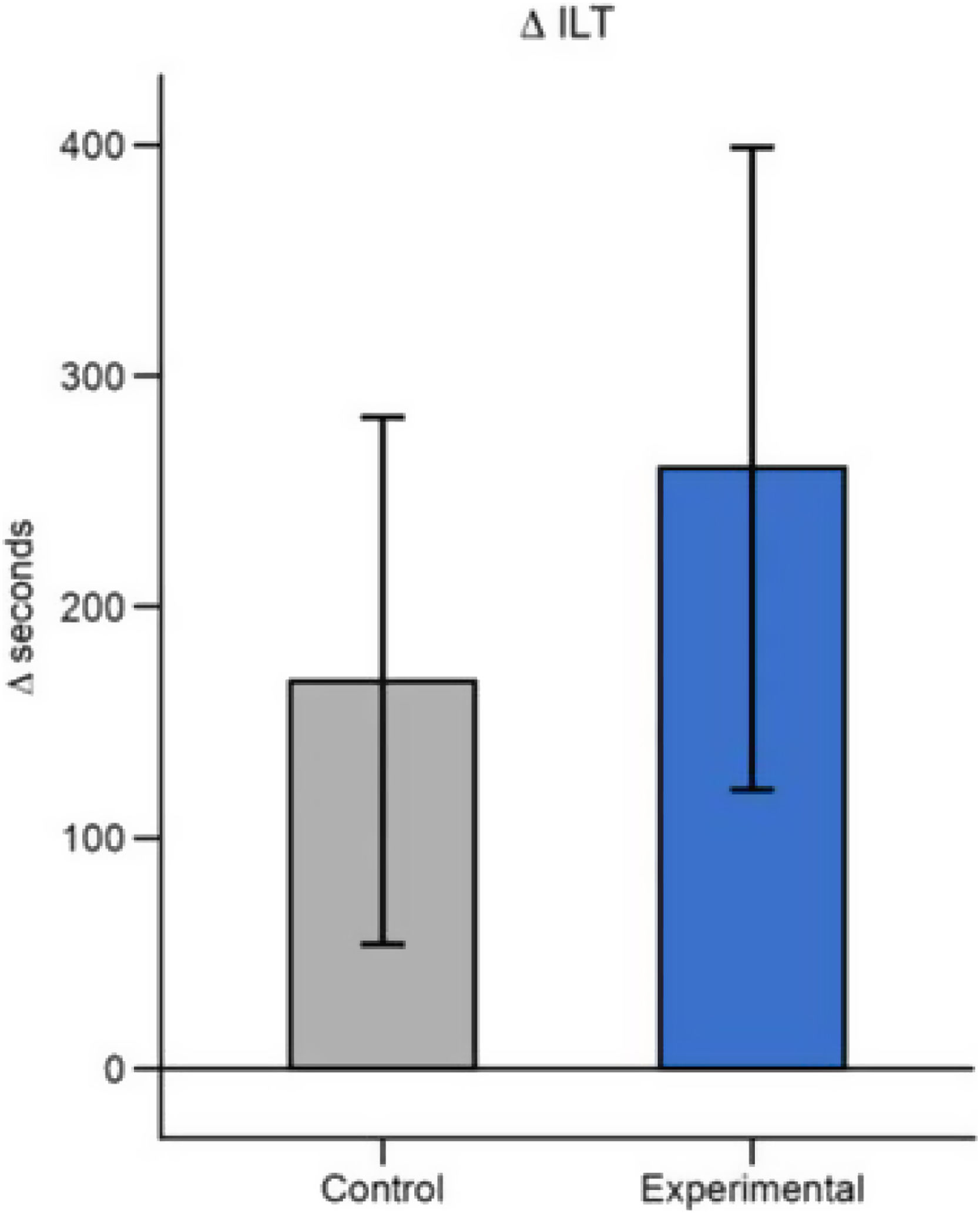
Chronic obstructive pulmonary disease (COPD) is a leading cause of global morbidity and mortality, projected to become the third leading cause of death by 2030 [1,2]. Pulmonary rehabilitation (PR) is the cornerstone non-pharmacological intervention for stable COPD, consistently improving exercise capacity, dyspnoea, and health-related quality of life [3,4]. In low- and middle-income country settings, PR utilisation remains suboptimal, largely constrained by exercise intolerance and severe exertional dyspnoea [5]. High-flow nasal cannula (HFNC) therapy has emerged as a promising exercise adjunct in COPD [6–8], and its asymmetric variant (A-HFNC) further promotes dead-space washout and reduces ventilatory demand by delivering gas preferentially through one nasal passage [9,10]. Whether A-HFNC can safely augment aerobic training intensity within a supervised PR programme had not previously been evaluated in a randomised design. This pilot trial aimed to (i) assess the feasibility and safety of A-HFNC during exercise-based PR in COPD, and (ii) generate effect estimates to inform a future powered randomised controlled trial (RCT) (Fig. 1).
We conducted a single-centre, two-arm, parallel-group, randomised pilot trial at Hospital Clínico San José (Santiago, Chile) from May to September 2025, following CONSORT 2010 pilot trial guidelines (ethics approval No. 276/2025; ClinicalTrials.gov NCT07497230, registered retrospectively March 2026). Adults aged 40 years or older with spirometry-confirmed COPD (post-bronchodilator FEV1/FVC<0.70) and mMRC dyspnoea score of 2 or higher were enrolled. Participants were randomised 1:1 to conventional supervised PR (control) or PR supplemented with A-HFNC during aerobic sessions (experimental). Both groups completed 12 supervised sessions consistent with British Thoracic Society minimum recommendations [11], comprising treadmill aerobic exercise, upper and lower limb resistance training, and patient education. Aerobic workload was determined from the baseline incremental load test (ILT, modified Bruce protocol) and progressively adjusted. In the experimental group, A-HFNC was delivered via Optiflow™ Duet nasal cannula (Fisher & Paykel Healthcare, Auckland, New Zealand), with cannula size (S, M, or L) selected according to each participant's nasal anatomy. The oxygen delivery system used was the AIRVO 2 (Fisher & Paykel Healthcare), an integrated heated humidifier with built-in flow generator. Flow rate, temperature, and FiO2 were individually titrated to maintain SpO2≥88% and patient comfort; comfort was assessed using a non-validated qualitative verbal scale at the start, mid-point, and end of each aerobic block with immediate adjustment if needed. Pre-specified feasibility criteria were: recruitment of 30 or more participants; adherence of 70% or higher per group; absence of serious adverse events attributable to A-HFNC; and positive tolerance feedback. Primary exploratory outcomes were ILT duration, six-minute walk distance (6MWD; Six-Minute Walk Test, 6MWT [12]), and COPD Assessment Test (CAT) score [13] assessed at baseline and after programme completion. Secondary outcomes included heart rate, systolic and diastolic blood pressure, mean arterial pressure, peripheral oxygen saturation (SpO2), rate-pressure product, and perceived dyspnoea (modified Borg scale), all assessed at baseline and post-programme. Descriptive statistics are presented as median [IQR] or mean±SD according to normality (Shapiro–Wilk test). Between-group differences are reported as mean differences with 95% confidence intervals derived from linear mixed models with group, time, and group×time interaction terms. Cohen's d was calculated to characterise effect magnitudes independently of statistical significance.
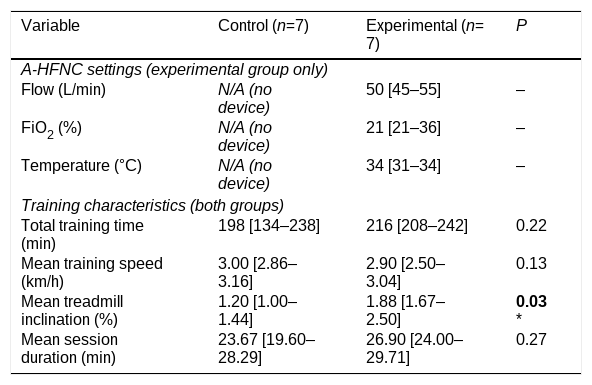
Baseline demographic and clinical characteristics were homogeneous between groups, with no statistically significant differences in age, sex, body mass index, GOLD stage distribution, or comorbidity burden. All pre-specified feasibility criteria were met. Thirty participants were recruited within five months; 14 completed the protocol (7 per group), yielding 83% adherence per group, well above the 70% threshold. No serious adverse events attributable to A-HFNC occurred, and all experimental-group participants tolerated the interface throughout without discontinuation. Observed A-HFNC settings in the experimental group were: flow rate 50L/min [IQR 45–55], FiO2 21% [IQR 21–36], and temperature 34°C [IQR 31–34]. Analysis of aerobic training parameters (Table 1) revealed no significant between-group differences in total training time (P=0.22), mean speed (P=0.13), or session duration (P=0.27). Crucially, the experimental group trained at a significantly higher mean treadmill inclination (median 1.88% [IQR 1.67–2.50] vs 1.20% [IQR 1.00–1.44]; P=0.03) at comparable speed and duration, indicating greater external mechanical workload, consistent with A-HFNC reducing ventilatory demand and thereby enabling a higher aerobic load [9,10].
A-HFNC settings and aerobic training characteristics.
| Variable | Control (n=7) | Experimental (n=7) | P |
|---|---|---|---|
| A-HFNC settings (experimental group only) | |||
| Flow (L/min) | N/A (no device) | 50 [45–55] | – |
| FiO2 (%) | N/A (no device) | 21 [21–36] | – |
| Temperature (°C) | N/A (no device) | 34 [31–34] | – |
| Training characteristics (both groups) | |||
| Total training time (min) | 198 [134–238] | 216 [208–242] | 0.22 |
| Mean training speed (km/h) | 3.00 [2.86–3.16] | 2.90 [2.50–3.04] | 0.13 |
| Mean treadmill inclination (%) | 1.20 [1.00–1.44] | 1.88 [1.67–2.50] | 0.03* |
| Mean session duration (min) | 23.67 [19.60–28.29] | 26.90 [24.00–29.71] | 0.27 |
Data are median [IQR].
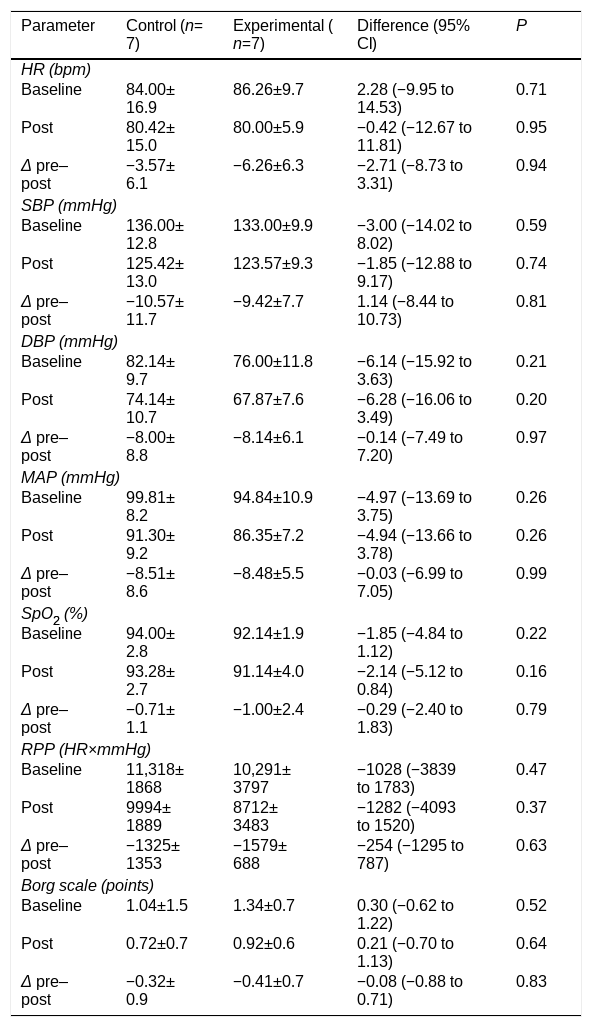
Maximal exercise tolerance assessed by ILT improved in both groups, with a larger absolute gain in the experimental group (Δ260±139s vs Δ168±114s; between-group difference 92s, 95% CI −31 to 216; P=0.14; Cohen's d=0.75). Although not statistically significant, as expected given the pilot sample, this large effect size supports a clinically meaningful advantage warranting confirmation in a powered trial. Submaximal exercise capacity assessed by 6MWT showed a non-significant numerical difference between groups (6MWD: 54.14±85.2m in control vs 17.42±76.6m in experimental; P=0.34), which should not be interpreted as evidence of benefit in either direction. This finding is best explained by the training-specificity principle [14] and the pronounced learning effect of the 6MWT, which may require up to three repetitions to reach peak performance in COPD [15]. Both groups surpassed the 350m mortality-risk threshold; descriptively, the experimental group's 17.42m gain falls within the lower end of the reported minimal clinically important difference (MCID) range of 14–30.5m [16]. CAT scores decreased comparably in both groups (control −3.00±5.2; experimental −2.57±10.8 points; P=0.91). Haemodynamic parameters showed similar improvements in both groups (all between-group P>0.20), and SpO2 remained stable throughout; these between-group differences are non-significant and should be interpreted as exploratory only (Table 2).
Secondary cardiovascular and physiological outcomes (mean±SD).
| Parameter | Control (n=7) | Experimental (n=7) | Difference (95% CI) | P |
|---|---|---|---|---|
| HR (bpm) | ||||
| Baseline | 84.00±16.9 | 86.26±9.7 | 2.28 (−9.95 to 14.53) | 0.71 |
| Post | 80.42±15.0 | 80.00±5.9 | −0.42 (−12.67 to 11.81) | 0.95 |
| Δ pre–post | −3.57±6.1 | −6.26±6.3 | −2.71 (−8.73 to 3.31) | 0.94 |
| SBP (mmHg) | ||||
| Baseline | 136.00±12.8 | 133.00±9.9 | −3.00 (−14.02 to 8.02) | 0.59 |
| Post | 125.42±13.0 | 123.57±9.3 | −1.85 (−12.88 to 9.17) | 0.74 |
| Δ pre–post | −10.57±11.7 | −9.42±7.7 | 1.14 (−8.44 to 10.73) | 0.81 |
| DBP (mmHg) | ||||
| Baseline | 82.14±9.7 | 76.00±11.8 | −6.14 (−15.92 to 3.63) | 0.21 |
| Post | 74.14±10.7 | 67.87±7.6 | −6.28 (−16.06 to 3.49) | 0.20 |
| Δ pre–post | −8.00±8.8 | −8.14±6.1 | −0.14 (−7.49 to 7.20) | 0.97 |
| MAP (mmHg) | ||||
| Baseline | 99.81±8.2 | 94.84±10.9 | −4.97 (−13.69 to 3.75) | 0.26 |
| Post | 91.30±9.2 | 86.35±7.2 | −4.94 (−13.66 to 3.78) | 0.26 |
| Δ pre–post | −8.51±8.6 | −8.48±5.5 | −0.03 (−6.99 to 7.05) | 0.99 |
| SpO2 (%) | ||||
| Baseline | 94.00±2.8 | 92.14±1.9 | −1.85 (−4.84 to 1.12) | 0.22 |
| Post | 93.28±2.7 | 91.14±4.0 | −2.14 (−5.12 to 0.84) | 0.16 |
| Δ pre–post | −0.71±1.1 | −1.00±2.4 | −0.29 (−2.40 to 1.83) | 0.79 |
| RPP (HR×mmHg) | ||||
| Baseline | 11,318±1868 | 10,291±3797 | −1028 (−3839 to 1783) | 0.47 |
| Post | 9994±1889 | 8712±3483 | −1282 (−4093 to 1520) | 0.37 |
| Δ pre–post | −1325±1353 | −1579±688 | −254 (−1295 to 787) | 0.63 |
| Borg scale (points) | ||||
| Baseline | 1.04±1.5 | 1.34±0.7 | 0.30 (−0.62 to 1.22) | 0.52 |
| Post | 0.72±0.7 | 0.92±0.6 | 0.21 (−0.70 to 1.13) | 0.64 |
| Δ pre–post | −0.32±0.9 | −0.41±0.7 | −0.08 (−0.88 to 0.71) | 0.83 |
Data are mean±SD. Differences are control minus experimental. CI, confidence interval; DBP, diastolic blood pressure; HR, heart rate; MAP, mean arterial pressure; RPP, rate-pressure product; SBP, systolic blood pressure; SpO2, peripheral oxygen saturation.
These findings establish that A-HFNC can be feasibly and safely integrated into supervised PR for COPD patients, satisfying all pre-specified criteria. The 83% adherence rate compares favourably with the 40–60% dropout commonly reported in international PR literature [17,18], confirming that A-HFNC imposed no additional participation burden. The significantly higher training inclination in the experimental group provides direct evidence that A-HFNC enables tolerance of greater mechanical workload, consistent with the physiological mechanisms of dead-space washout and CO2 re-inhalation reduction previously described for asymmetric interfaces [9,10]. The associated large effect size for ILT improvement (Cohen's d=0.75) supports the biological plausibility of this intensity advantage translating into superior physiological adaptations in a sufficiently powered trial.
Both groups showed comparable CAT reductions approaching or exceeding the 2-point MCID [19], consistent with established evidence that PR improves patient-reported outcomes regardless of adjunctive strategies [4]. Importantly, A-HFNC did not provide incremental benefit in health-related quality of life beyond standard PR. This is not unexpected: A-HFNC primarily targets exercise physiology (reducing ventilatory demand and enabling higher training loads) rather than symptom perception at rest, and the 12-session programme and small sample are unlikely to be sensitive enough to detect adjunctive PROMs differences. Longer follow-up and larger samples in the future RCT may capture these effects if present. Comparable haemodynamic adaptations in both groups reflect expected autonomic responses to aerobic training [20]. The 6MWD discrepancy should be interpreted with caution given its sensitivity to learning effects [15]; future trials should include a minimum of two 6MWT assessments per time point. Limitations include small sample size, inability to blind participants and therapists, single-centre design, and follow-up restricted to the 12-session programme; all will be addressed in the powered trial.
In conclusion, A-HFNC during exercise-based PR was feasible and safe in patients with COPD, meeting all pre-specified feasibility criteria. The intervention enabled a significantly higher mechanical training load and demonstrated a large-effect exploratory signal for improved maximal exercise performance. Based on a pooled SD of 127.3s and a between-group mean difference of 92.3s (Cohen's d=0.73), a provisional calculation suggests that a future two-arm RCT would require a minimum of 36 participants per group (n=72 total) for 80% power at a two-sided α=0.05, allowing for 20% dropout. However, as recommended by methodological guidance [21–23], sample size estimates derived solely from pilot data carry inherent uncertainty; we recommend validation against existing literature and adoption of an internal pilot design with pre-specified re-estimation rules at the protocol stage of the definitive trial. These pilot findings support progression to a fully powered randomised controlled trial.
Artificial intelligence involvementThe authors have used artificial intelligence tools exclusively to improve the English writing of this manuscript. Specifically, DeepL Translator (Free version, powered by generative language AI) and Grammarly (Premium version, powered by advanced AI) were used for language editing. No AI tool was used for data analysis, interpretation, or generation of scientific content.
FundingThis research did not receive any specific grant from funding agencies in the public, commercial, or not-for-profit sectors. MEDIPLEX provided clinical supplies related to the A-HFNC intervention. The company had no role in study design, data collection, analysis, interpretation of results, manuscript preparation, or the decision to submit for publication.
Conflicts of interestThe authors declare not to have any conflicts of interest that may be considered to influence directly or indirectly the content of the manuscript.